Joel Cohen, who led Boston Camerata early music ensemble to international prominence, dies at 84

By Bryan Marquard
Boston Globe Staff

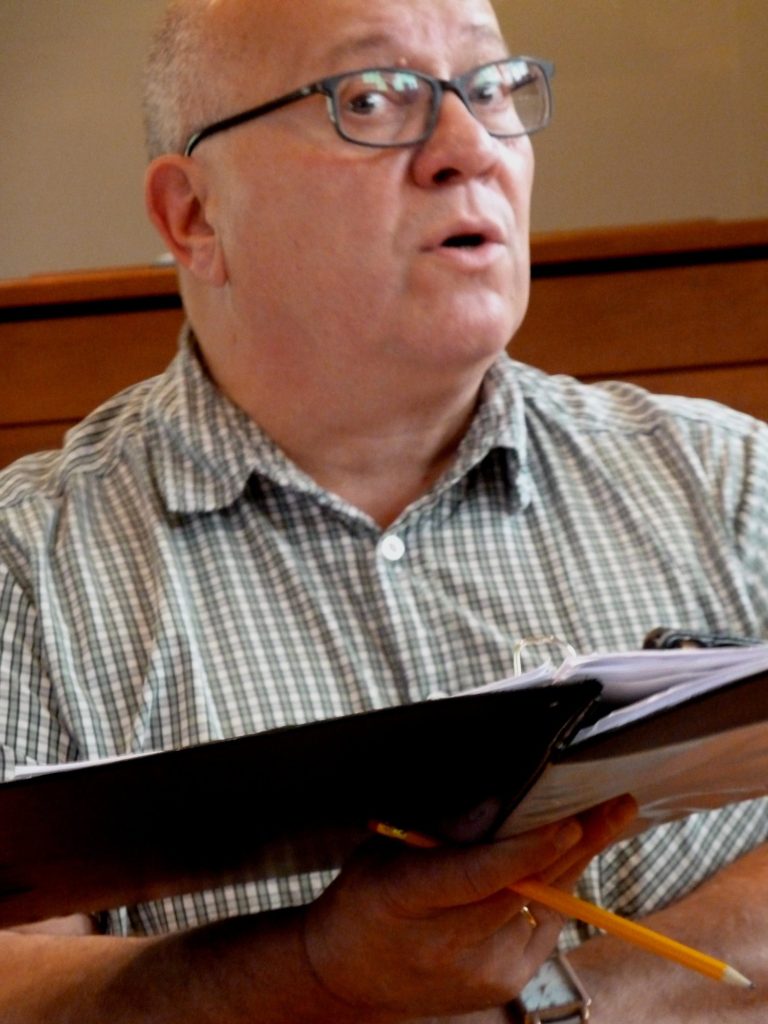
Joel Cohen playing the lute, a Turkish instrument, in 2011. DINA RUDICK

During Joel Cohen’s four-decade tenure as music director of The BostonCamerata, which he guided from local renown to international prominence, some audiences forgot that the early music ensemble had even existed before his leadership.

“I sometimes have to tell people I didn’t found the Camerata,” Mr. Cohen told The Boston Globe in 1983. “After all, I was only 12 in 1954!”

Combining scholarly precision and warm unpretentiousness, he engaged with musicians and audiences alike from 1968 onward, and he continued his association with the ensemble after becoming music director emeritus in 2008. Praised by critics and musicians for unearthing long-ago musical threads that stitched one culture to another, he helped Camerata performances illuminate the creative bonds that get lost amid history’s political acrimony.

“Music can help reestablish our personal connection with humanity in general, can make us feel that there is hope for humankind,” he told the Globe in 1999. “That is the contribution that musicians can make.”

Mr. Cohen, who used his personal connection to France to establish the Camerata as an essential part of that country’s musical imagination, died in hospice care in Haverhill on July 26. He was 84 and lived in Amesbury.

“What was captivating about Joel was his energy and the curiosity that he carried for the world,” said his wife and musical collaborator, the soprano and teacher AnneAzéma, who succeeded him in leading the Camerata and is its artistic director.

That intense curiosity was there “for his field, of course,” she added, “but also for the world at large — for art, for landscape, for traveling on his moped when he was younger from one side of Europe to the other. He had a deep appetite and curiosity for life in all its ways. And his energy was boundless.”

He brought much of that energy to bear in reaching beyond standard early music repertoires to present programs that showed how musical ideas migrated across borders separating nations and religions — from Christianity to Judaism to Islam and back again, for example.

Mr. Cohen always found “connections across musical genres, across timeframes, across cultures and countries,” said Deborah Rentz-Moore, a mezzo-soprano who has performed with the Camerata and teaches voice at the University of New Hampshire. “It’s been so invigorating to experience that as a performer.”

By doing so, he also removed barriers audiences felt between music they liked and what they hadn’t yet encountered.

“Joel showed that the same core music bounced back and forth and was augmented and added to by the different cultures,” said Tod Machover, a composer and a professor of music and media at the Massachusetts Institute of Technology.

By doing so, Mr. Cohen helped audiences understand that “this music that they did not know is suddenly relevant to them,” Rentz-Moore said.

“I think he brought the past into the future,” Machover said.

From the outset, Mr. Cohen saw the barriers he would face with audiences and, to some extent, with musicians.

“There is a tendency for early music groups either to specialize in one area, or to skim the top off of everything and keep it lively by hitting the tambourines a lot,” he told the Globe in 1983.

With engaging enthusiasm, Mr. Cohen led the Camerata to musical landscapes other ensembles never dared to visit.

“What you have in the Camerata’s music director,” Globe music critic Richard Buell wrote in 1999, “is a quite unearthly melting together of academic researcher, vocal coach, conductor, high-art lutenist, public educator, and unreconstructed vaudevillian.”

Born in Providence on May 29, 1942, Mr. Cohen was the older of two siblings and the only son of Jacob Cohen, a businessman, and Beatrice Gross Cohen, who had been a social worker.

Though Mr. Cohen’s parents sang in ensembles, “they strongly discouraged him from being a musician,” Azéma said. Mr. Cohen’s parents didn’t think he could make a living in music.

In a lengthy 1983 interview with Globe music critic Richard Dyer, Mr. Cohen recalled performing as a boy soprano in Providence. He also studied piano, somewhat unhappily, for a few years.

Mr. Cohen received a bachelor’s degree from Brown University, his father’s alma mater, and a master’s in composition from Harvard University.

He took up guitar and considered becoming a folksinger. Instead, the guitar led him to buy an inexpensive lute in Harvard Square, and early studies on that instrument led to an invitation to perform with the Camerata, about a decade after its founding. In the early 1960s, the ensemble was still officially associated with the Museum of Fine Arts, Boston.

Around that time, one of his teachers at Harvard suggested he try to study in Paris with the legendary conductor and composer Nadia Boulanger.

“I had no audition, submitted no papers or manuscripts,” Mr. Cohen recalled in 1983. “I just had a letter of recommendation.”

In France on a Danforth fellowship, he studied with Boulanger.

“She lived in her own world, but there were those astonishing flashes, when she would look at you and tell you your own truth,” he told the Globe.

Returning to Boston, he became music director of the Camerata in 1968.

Through personal connections made while studying with Boulanger, Mr. Cohen led the Camerata on many tours of France: in country towns and in Paris, on radio programs and recording for French companies. Reviewers took note that a Boston early music group was teaching French audiences about their own musical heritage.

“We managed to break through the croissant curtain,” he quipped about the ensemble’s success in France.

While the Camerata was there during one tour, Azéma’s voice teacher sent her to a summer workshop the ensemble was conducting in the south of France.

“So I went and the rest was history,” Azéma said. She and Mr. Cohen married in 1983.

On the stage speaking to audiences and in his writings as well, Mr. Cohen was “a fantastic communicator,” Azéma said.

Critics often commented about his charisma.

“He had a clear way of sharing his talent with joy,” Azéma said.

Machover, a friend of more than 40 years who also is faculty director of MIT Media Lab, said that “so many things were special about Joel — his incredible imagination, and his creative courage exploring music and literature that literally nobody knew.”

But even more, he added, his voice breaking, “he had this kind of childlike sparkle in his eyes. When you keep that for your entire life, it’s just special.”

Azéma is Mr. Cohen’s only immediate survivor. A gathering in the fall to celebrate his life and work will be announced.

His engaging personality was such that he even filled in as host of Robert J. Lurtsema’s legendary WGBH-FM radio program, “Morning Pro Musica,” structuring broadcasts much as he built Camerata programs.

“You’ve got to think about the key relationships and the tempos and the moods,” he said of his radio hosting in 1981. “You have to build a rhythm within each section of the program.”

Similarly, he compared putting together a Camerata performance to creating a piece of music.

“Building a program was exactly like structuring a compositional experience,” he said in 1983. “A concert should have a beginning, a middle, and an end, its fast parts and its slow parts, its sad parts and its happy parts. It should look backward, and it should
look forward.”

©2026 Boston Globe Media Partners, LLC
https://www.bostonglobe.com/2026/08/10/metro/former-boston-camerata-music-director-joel-cohen-dies-at-84/
The Year in Music Program Image
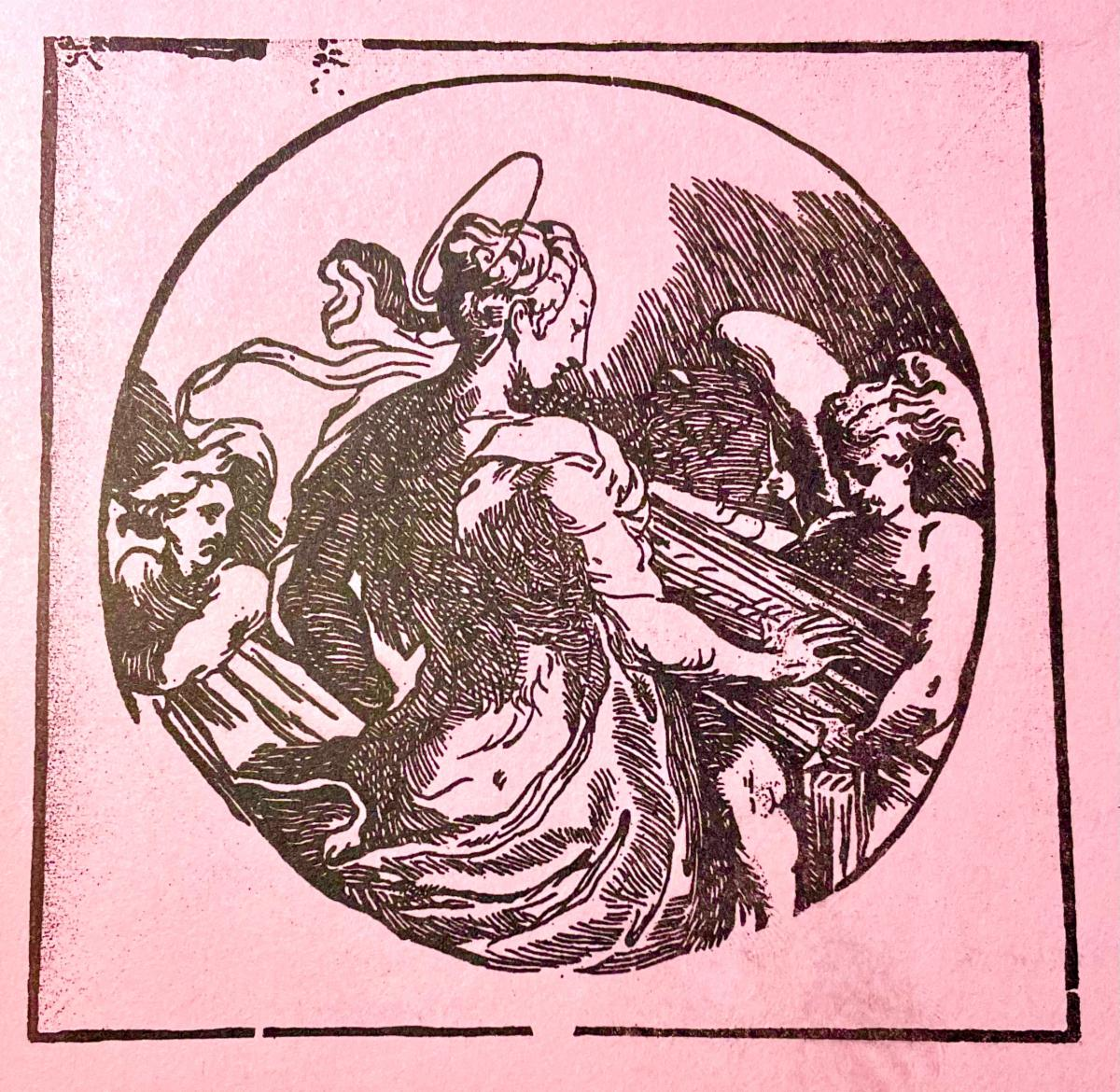
Program cover for The Year 1600 in Music concert on 1 May 1972, in which Frank performed.

The Boston Camerata was saddened by the news of Frank Hoffmeister’s passing on Tuesday, May 12. Frank was a member of our original vocal quartet, when the ensemble was known as The Camerata of the Museum of Fine Arts, Boston. Alongside Jane Bryden, Kathy Pusztay, and Mark Baker, he helped grow the Camerata’s renown quite quickly.

“We had good times together,” shares Director Emeritus Joel Cohen. 

And Frank remembered his times with the Camerata fondly, too. During our 70th anniversary season, he sent us this message:

“Much of the repertoire that we did was very challenging, really hard for us (for example, Gesualdo). Many of the programs were of French music. It was a good way for young singers just starting out to get their feet wet! We had a really good time together, with lots of laughter and joking.”

Camerata has become what it is today thanks to past generations of great musicians. Thank you, Frank!

With deep sorrow we share the news: Ingeborg von Huene, a fine musician, deeply compassionate human being, and  last surviving member of the original Camerata of the Museum of Fine Arts, has died at the age of 93.

Ingeborg von Huene

Joel Cohen, who first met Inge when, still a student, he joined Camerata in 1963, offers these thoughts:

“With Ingeborg von Huene’s passing, a beautiful chapter in the history of the early music revival comes to a close. Inge so loved and encouraged music in all its manifestations. She and her husband Friedrich were core members of the original Camerata, and I loved hearing them play their parts, he on all kind of winds, she on recorders and gambas, when the small, pioneering ensemble performed Renaissance music by Isaac, Senfl, Susato, and others. Their enthusiasm for such little-known but precious repertoires inspired me to pursue and persevere in the arena of pre-Baroque performance. She knew that someday many people would come to love early music, and she was absolutely right.

“Inge was also the essential co-head of the world-famous von Huene Workshop, directing business and sales, moving it forward into the international early-instruments market, as Friedrich and his staff turned out their world-class, impeccably crafted recorders and flutes.

“She was also a close observer of the early music movement and people who participated, and was, in my recollection, one of the most generous and encouraging souls in the entire field. She took great interest in the doings of her cohorts and colleagues, and was always ready with words of encouragement to aspiring young performers. She was like a benevolent gardener, helping the new shoots come out of the ground, into fruition.

“May it be remembered that she, along with Friedrich, founded the Boston Early Music Festival.  I remember the joy in her voice as she first announced it to the Camerata board during a meeting.

“But most of all, beyond all her vital achievement in the music world, I remember her smile, recalling Ruben’s portrait of Isabella Brandt,  her delightful accent, her warmth, her love of family-based singing and playing, her words and gestures of welcome and support. What a magnificent person she was, and how we shall miss her.”

Andrea Wirth leads Yankee Doodle Dandy during Liberty Tree, October 2017.
Photo by Dan Busler.

We mourn the death of Andrea Wirth (1970-2022), a superb musician and wonderful colleague. Her always-musical, spot-on percussion playing enriched so many of our Americana concerts, tours and recordings, most recently Camerata’s Free America! CD for Harmonia Mundi. Her sunny, life-embracing personality enriched us beyond measure, and as she endured her final illness with a profound philosophy of life, she became our teacher. How we shall miss her, but how we do treasure the enduring memories: those musical experiences, and those moments of fellowship!

By Eliahuf - Own work, CC BY-SA 4.0
Judy Davidoff
was one of Camerata’s founding members. By the time I joined, she had already moved on to performing with the New York Pro Musica, whose Sanders Theater concerts I regularly attended. What an apparition in that red concert dress! I admired her as a model of grace, elegance, and musicality. To me and to so many others, she was a role model, teaching us precious things about music and life by her example. Judy’s was an extraordinary existence, and her memory is indeed a blessing.

— Joel Cohen

Read more at the New York Times

Grieving, we announce the death this weekend, from a sudden and massive heart attack, of our dear friend and colleague, British tenor Tim Evans. Tim was a superlative musician, alert, accurate, unfailingly musical. Tim was also a great companion on tours, home concerts, and media projects and sang with Camerata for 25 years. We are heartbroken that the new Camerata recording, only days from public release, in which he sings so beautifully, will be his last appearance with us. It will be a while before we can take the measure of this profound loss.

Our thoughts at this terrible moment go out to Tim’s family in Germany: his wife, Suse, and his two children, Emily and Benjamin.

Vielle, Gittern, Harp

We regret to announce the passing of Dutch-born Margriet Tindemans.

She was equally at home in the music by the 12th century mystic Hildegard of Bingen, the music of renaissance Courts of Europe, the solo viol repertoire of the High Baroque as well as in the contemporary works by Kevin Volans and Joan Pranks Williams, who are among the many composers who dedicated works to her. This has made her one of the most sought after players of early bowed strings instruments worldwide. She maintains an active performing, recording and teaching schedule. She is on the faculty of the University of Washington School of Music and directs the Northwest Center for Early Music Studies and the Early Music Vancouver Renaissance and Baroque program. She has recorded for Harmonia Mundi Germany and France, Erato, accent, Classical Masters, EMI, Smithsonian Collection, Eufoda, CRD, and Koch International Classics.

Donald Wilkinson

The Angel Took Risks

How, then, to say goodbye to a collaborator, colleague and companion of twenty-five years, someone with whom we made music, sharing good times and bad, season after season, adding up to a full third of man’s biblical lifespan? What appropriate, meaningful words can come forth, even as we struggle with our tears and our grief, to evoke for others essence of Donnie’s kind and tender soul?

He was a man of almost angelic purity. Candid and naïve almost to a fault, held back from the start by problems of education and upbringing, he wanted, despite significant inner handicaps, to go forward towards life and to give his existence meaning. And he did indeed forge a path for himself, realizing his ambition to be a performing artist, and giving enormous pleasure and consolation to countless others via the beauty of his voice. To cite a line from the American songbook, a repertoire that Donnie treasured and recorded, he did it his way. There is a nobility to his existence, and I am humbled as I contemplate, insofar as I perceive it, the arc of his life.

You heard that round, warm, tender singing voice, onstage and via recording, and reveled in its author’s solid, confident musicianship, in his authentic and appealing personal presence. Did you know, however, that Don’s training was as an electrical engineer, and that he spent years working in a large corporation before deciding that music was his true calling? He told me once that his family had strongly counseled against his career change. Yet he persisted, leaving secure employment, and braving, at the start of his new professional life, genuine hardship and financial stress. He took a big risk, and he succeeded, becoming a property owner in his personal life, and a reliable and welcome part of the Boston-area musical scene.

And none of us, in a field known for its competitiveness and occasional cruelty, ever saw Don, as he rose to widespread acceptance and appreciation, show anything but good will and respect and frequent affection to his colleagues. “He didn’t have a mean bone in his body” is the refrain I have heard echoed from several corners over these last days. He indeed did it his way, but his way, so remarkably, included remaining a gentle soul, always and forever.

And his utterly extraordinary purity of being was unclouded by any trace of pretentiousness, posturing, self promotion, or self-righteousness.

What you heard from the concert hall stage, as Donnie’s rich baritone rang out, was an affirmation of life and, also, a declaration of love for creation itself. As far as I know, he, though a church musician, was himself unchurched; and so I believe that his singing was the most intense expression of his genuine and authentic spirituality.

We also saw this offering of love, and this search for love, in his other activities and passions. So many of us learned from, and enjoyed, his intense devotion to the world of birds, his forays with binoculars into forests, swamps and marshes – some of us occasionally accompanied him to those places – and, after every tour to every continent, his inevitably long lists, circulated to one and all, of every winged creature he had managed to spot. We were awakened to the world of birds via Don’s enthusiasm, and our sense of awe at the diversity and richness of the universe was increased immeasurably.

He was an enthusiast about the things that were important to him. He also loved nineteen-fifties crooner records, and I Love Lucy memorabilia, and celebrity autographs, and old board games. And Scrabble. And the ocean. And, oh yes, his adored kitties. What an admirable appetite for existence!

I am so sorry for the numerous sorrows he underwent, for his failure to find a lasting, significant other, for the suffering engendered by his final disease. But his existence had meaning; even though it was too short, his was a rich life. He shall continue to live in our hearts for the light, the air, and the beautiful music his time on earth engendered. The angel took risks. He brought goodness into the world. May our friend Donald Wilkinson rest in peace.

Aniane, September 29, 2018

Fredrich Von Huene

Goodbye, Friedrich

We render deepest homage to the great Friedrich von Huene, who died peacefully last Sunday near his wife Ingeborg, their children, and grandchild.

You will be reading elsewhere about Friedrich’s enormous contribution to the early instrument revival, his pioneering studies of historic wind instruments, his success in creating an independent business, and his profound influence on a younger generation of craftsmen/instrument makers.

But what I want to evoke right now, so gratefully, is Friedrich’s wonderful presence in, and enthusiasm for, the art of early music. He and Inge were charter members of the Camerata of the Museum of Fine Arts (now the Boston Camerata), and their skill on a range of instruments, and evident love for the repertoires, made a deep and lasting impression on the youngster I was in 1963, performing for the first time with the ensemble. Friedrich loved to play. He had a rich and personal sound on recorders and flute, and his forward-looking energy imparted vitality and focus to what was at that early point a sometimes-tentative mix of professionals and amateurs.

Friedrich continued to perform with Camerata for several seasons after its change in directorship, and co-founded, with me, the Cambridge Consort. He and Inge remained connected for many years with the world of Boston performance, encouraging young musicians and mentoring so many of us with good advice and friendship. Friedrich and Inge, it must not be forgotten, were co-founders of the Boston Early Music Festival; their vision for our field lives happily on, and continues to inspire us.

I and the Boston Camerata are honored to have known Friedrich von Huene as colleague, mentor, and friend. At this time of sadness, but also of consoling memory of a life well lived, we send loving condolences to his wife and family.

 
– Joel Cohen 5/11/2016

tom_zajak.jpg
We announce, with very heavy heart, the death yesterday of our colleague and beloved friend, Tom Zajac. His long exit from this world was not an easy one; there was much pain along the way, both for Tom and for those near him. And even now there are many tears still to be shed. But not by Tom; he is now at peace, and that is the blessing we who remain behind can all share.

Tom’s love of music, and life, was like an inner flame, and that flame gave him a glow from within. The flame was also something he knew how to transmit to others, as the outpouring of affection and caring from so many people these last months and weeks so amply shows. Even more wonderful: that beneficent, life-giving, contagious flame has not gone out. It continues to live in our hearts, and we pledge to nurture and renew it in our future music-making and through our actions in the world.

We also send our love and condolences to Lilli Nye. We’ll be there for you, Lilli, to the best of our mortal abilities. Thank you for sharing so much with us, in such a pure and honest and generous way. You teach us all how to deal with profound loss.

Tom appears in the opening of this video.